
America is marking the 25th anniversary of the September 11th attacks, with solemn events and tributes taking place across the United States. Watch CNN and follow live updates: https://cnn.it/4yB5qW4
 North London Chinese Association 北倫敦華人協會
America is marking the 25th anniversary of the September 11th attacks, with solemn events and tributes taking place across the United States. Watch CNN and follow live updates: https://cnn.it/4yB5qW4


Until this year, the annual September 11 commemoration ceremony at Ground Zero has included six moments of silence — one for each of the key fatal moments of that day in 2001.
But a seventh moment of silence will acknowledge another growing toll. It will be held for the thousands more who have since died from diseases linked to their exposure to the toxic ash and rubble of the World Trade Center. https://cnn.it/4xOH62T

Join us for the Critical Collective screening of Samidoun: the Steadfast women of Palestine.
Followed by a post screening panel with director Mariam Shahin, academic Yara Sharif (Architects for Gaza) and Hala Shoman (Palestine Deep Dive)
Date: 20.9.26
Venue: Genesis Cinema, Mile End Road, Whitechapel, E1 4UJ
In aid of the Ghassan Abu-Sittah Children’s Fund: https://gascf.org
Time: 2.30pm-4.30pm with screening at 3pm
For more information see our instagram: critical_collevtive


The authorities in Nepal and Tibet said that more than 4,000 people were missing after a deadly Himalayan landslide and glacial collapse last month.
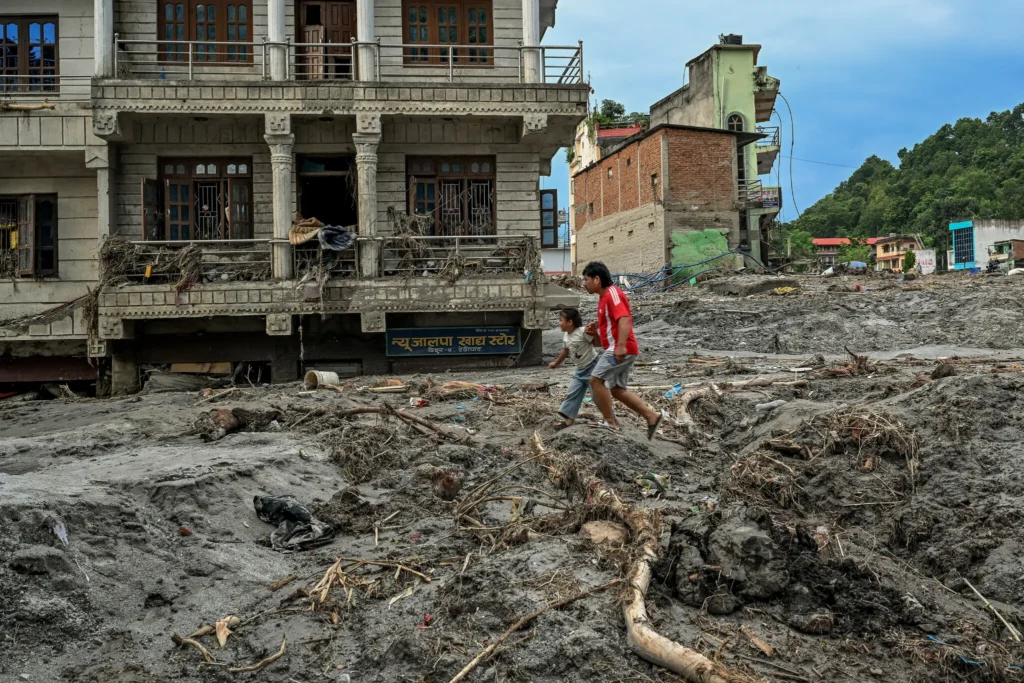
From New York Times: https://www.nytimes.com/2026/08/26/world/asia/nepal-tibet-floods-wtk.html?smid=whatsapp-nytimes
Rescuers were still searching for people trapped in mud and debris more than a week after the catastrophic Himalayan floods that killed more than 1,300 people.
The Nepali Army pulled three workers alive from the tunnels of a hydropower project along the Trishuli River in Nepal on Friday and Saturday. Elsewhere, rescue workers found a woman alive under a house buried by mud, after her family had already carried out her last rites. It was not clear how many others might still be alive 11 days after the glacier collapse and landslide on Aug. 26 set off huge floods in Nepal and the Tibet region of China.
About 5,000 people, including several hundred foreigners, remained unaccounted for in Nepal, the country’s disaster agency has said. In Gyirong County in Tibet, 519 people were missing.
The disaster has killed 1,290 people in Nepal and 43 in Tibet, according to the authorities, as floods washed away roads, bridges and entire villages in Nepal, as well as a border crossing complex in Tibet. Rescue crews have been searching a sprawling area on both sides of the border as hopes dimmed of finding more survivors.
Torrents of water and mud rushed last week through the valley of the Trishuli River, which is flanked by steep mountains and straddles the border between Tibet and the Rasuwa district of Nepal.
Images from the disaster captured the terrifying speed and force of the floods. Surveillance footage verified by The New York Times shows crowds running from the surging water before it engulfs buildings and vehicles at the Gyirong crossing at China’s border with Nepal.
The Chinese state news agency Xinhua reported “significant” casualties at Gyirong. Other footage released by Chinese state media showed surging waters and mud overwhelming buildings, uprooting trees and blocking roads.
Scientists who analyzed satellite imagery and seismic data said that a high-altitude landslide coinciding with a glacial collapse most likely set off the flooding. Images showed that a huge section of bedrock beneath a glacier on the north face of Langtang Lirung, a mountain in Nepal near the Tibetan border, had given way at an elevation of about 17,000 feet.
“The rock that the glacier was sitting on collapsed,” said Kristen Cook, a geomorphologist at the Université Grenoble Alpes in France. The combined collapse sent millions of metric tons of rock and ice into the valley below.
The event was so powerful that the U.S. Geological Survey registered it as a magnitude-5.2 seismic event.
As the rock and ice surged down the mountainside, the flow incorporated water and river sediment, becoming a torrent that traveled dozens of miles through a network of rivers and tributaries.
In Nepal, the flood swept up villagers, hydropower workers and hundreds of tourists and travelers from nearly three dozen countries. Among the missing are more than 900 people who worked on hydropower construction sites, according to the country’s government.
Nepalese officials said on Thursday that about 590 foreign nationals from 34 countries remained missing, including travelers from Australia, Britain, Malaysia and the United States. Among them were about 100 Chinese citizens, the Chinese Foreign Ministry has said.
In Tibet, about 260 foreigners were among the missing, Chinese state media reported on Aug. 30. They included 104 Nepalis, 49 Indians, 33 Latvians and 18 Americans.
About 300 Indians were missing in Nepal, India’s foreign ministry said last week, including many pilgrims traveling in groups to or from Mount Kailash in Tibet. Mount Kailash is a sacred site for multiple faiths, including Hinduism.
Despite lower-than-average rainfall across Nepal this monsoon season, the local news media reported heavy rains that caused deadly landslides and flash floods earlier this month.
In 2024, floods and landslides killed hundreds in Nepal, including in the densely populated region around Kathmandu, the capital.
Nepal is prone to landslides and floods when heavy monsoons collide with the Himalayas.
The warming climate has made weather events more dangerous and deadly, causing frequent flooding from melting glaciers. Climate change has also intensified rainfall. At the same time, rapid development and haphazard construction have added to the risk that lives will be lost in natural disasters.
Reporting was contributed by Binod Ghimire, Lily Kuo, Mujib Mashal, Suhasini Raj, Hari Kumar, Leo Sands and Pranav Baskar.
Zane Irwin is an international reporter and a member of the 2026-27 Times Fellowship, a program for journalists early in their careers.
Lynsey Chutel is a Times reporter based in London who covers breaking news in Africa, the Middle East and Europe.


Book here: https://cinemaweekender.com/
High Security Notice:
Please be aware that there is a group of people going door to door pretending to be Home Affairs Officers. They have documents and letterheads from the Home Affairs Department and claim that they need to verify that everyone has a valid ID for the upcoming census. They rob houses. They are everywhere and they look neat.
Someone will come to your house and say I want to take your photo/fingerprint according to some scheme. They have a laptop, a biometric machine and a list of all the names. They show the list and ask for all this information.
Please be aware that there is no such initiative by the government.
Please be aware that all of this is fake. Do not give them any information. Everyone should be vigilant and aware!
Send this to all your community groups. Please inform your family and friends.
https://www.metengage.co.uk/Alerts/A/485505/Local-Fraud-Message Please send to anyone you see fit. This is happening in Richmond so I’m sure happening everywhere Please inform all vulnerable people.