.
Exclusive: Home Office ruling means thousands more Hongkongers will be eligible to come to the UK over next five years.

Dozens of MPs have called on the government to ensure changes to permanent residency requirements do not withdraw support for Hongkongers and others on humanitarian visas.
In 2020, following the imposition of Beijing’s national security law in Hong Kong, the UK government announced a new visa scheme that would allow BNO passport holders there to come to Britain and gain settled status after five years, plus citizenship a year later.
Since the BNO route for people from Hong Kong was launched, more than 230,000 people have been granted a visa and almost 170,000 have moved to the UK.
The route’s expansion closes a gap in eligibility that has led to unfair outcomes within families, with some children able to resettle and others not.
Keir Starmer raised Lai’s case directly with President Xi Jinping during a recent visit to Beijing. Now that the sentencing has happened, the government has said it will “rapidly engage” further on Lai’s case.
In December, 34 Labour MPs said they had “significant concerns about the potential adverse consequences” of changes announced in November to indefinite leave to remain (ILR), which allows migrants to live, work and study permanently in the UK, then acquire British citizenship.
They wrote to the migration minister, Mike Tapp, to ask him to ensure new requirements were not applied retroactively to about 200,000 Hongkongers who were granted BNO visas from 2021 by the previous Conservative government after fleeing a crackdown by Beijing.
Of particular concern is the newly announced requirement for “upper intermediate” (B2) level of English, increased from “intermediate” (B1), and the necessity to have earned more than £12,570 a year for a minimum of three to five years before being able to apply for ILR.
The government has clarified that Hongkongers will be able to apply for settled status after five years, unlike other migrants who will have the period extended to 10 years.
The government said it was consulting on the salary thresholds and language requirements. Shabana Mahmood, the home secretary, said: “This country will always honour its historic commitment to the people of Hong Kong. We are proud to have already provided a safe haven to almost 170,000 Hongkongers since 2021. In the face of the continued deterioration of rights and freedoms, we are now expanding eligibility so more families can build new lives here.
While we must restore order and control to our borders, the British people will always welcome those in genuine need of sanctuary.”
Yvette Cooper, the foreign secretary, said: “Though Hong Kong’s rights and freedoms continue to erode, this government’s support for its people remains steadfast, and that’s why we are ensuring that young people who missed out on resettlement protection because of their age will now be covered.”
The pressure group Hong Kong Watch [HKW] welcomed the visa expansion but said it would be a “half-measure” until the government also addresses concerns around settled status.
Thomas Benson, a senior policy advisor at HKW, said: “We are very pleased to see this expansion, which we have campaigned on for over three years.
“However, the government must know that many BNO Hong Kongers remain worried about the proposed changes to settled status on the BNO scheme, which will see the vast majority of BNOs unable to acquire settled status.
“Expanding eligibility without addressing issues around settled status requirements is, I’m afraid, only a half-measure.”


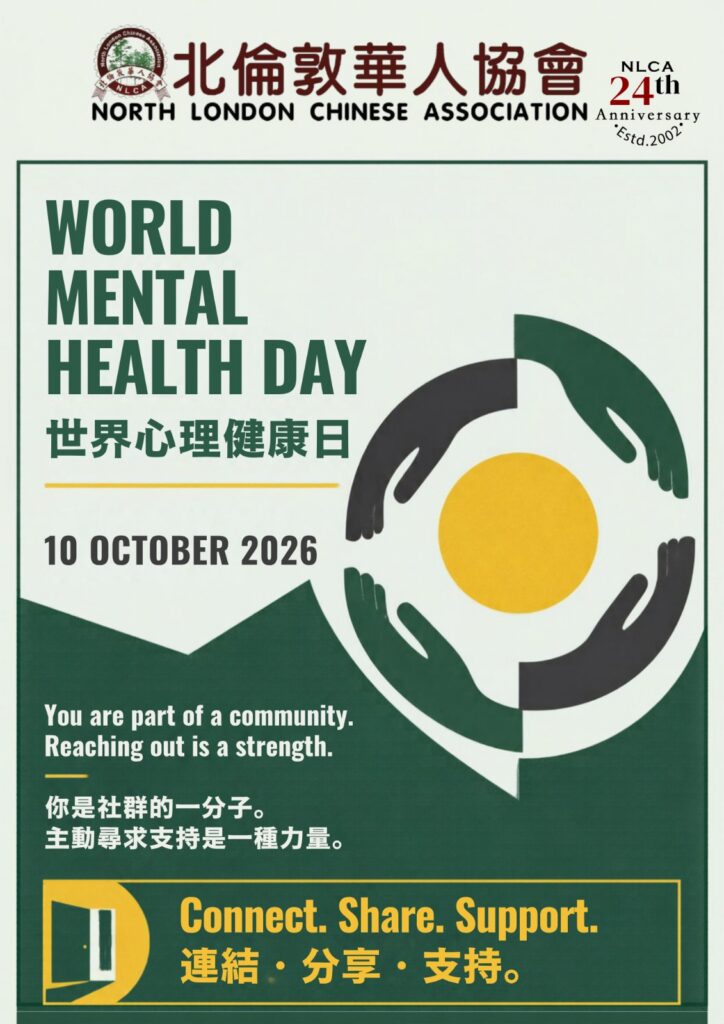
We are proud to announce that North London Chinese Association (NLCA) has been officially recognised as a Recognised Project at the London Dangoor Awards 2025.
This recognition celebrates NLCA’s outstanding services to faith and belief communities across Greater London, highlighting our ongoing commitment to community cohesion, cultural understanding, and public service.
The award, presented by The Faith & Belief Forum, is a meaningful acknowledgement of the dedication of our team, volunteers, partners, and community members who continue to support our work.
We are honoured to receive this recognition and remain committed to serving our community with integrity, inclusivity, and impact.
This achievement belongs to everyone who has supported NLCA’s journey — thank you for being part of our mission.


New British passport dual citizenship rules are coming into force in February. (Getty)(Matt Cardy via Getty Images)
British dual citizens will face tough updated rules when entering the UK from overseas, under new government guidelines.
New rules that come into effect from the end of February will mean that dual citizens can only use a current British passport to enter the country – and not the passport of the country where they hold dual citizenship.
It means that any British national attempting to enter the country will be refused entry unless they present their British passport or a certificate of entitlement to prove their status.The changes, which apply to all British and Irish dual citizens abroad, are part of the Home Office’s rollout of the Electronic Travel Authorisation (ETA) scheme, designed to enhance border security.
A Home Office spokesperson said: “Digitising the immigration system using ETAs ensures millions of people enjoy a more seamless travel experience to the UK.
“ETAs also give us greater power to stop those who pose a threat from setting foot in the country and gives us a fuller picture of immigration.”
The UK recognises dual citizenship, allowing people to hold British nationality alongside another passport without losing their rights. There has never been a strict legal requirement for British citizens to enter the country using a British passport.

New rules to enter the UK will come into force for dual citizens from 25 February. (PA)(Roy Conchie)
As a result, dual nationals – particularly those holding passports from visa-exempt countries such as Australia, Canada or EU states – can travel to the UK on their non-British passport.
If asked, travellers are usually able to confirm their British status at the border using alternatives like an expired British passport, a naturalisation certificate or proof of the right of abode.
A certificate of entitlement, which proves the passport holder has the right to stay in the UK, can also be used.
From 25 February, when the ETA scheme comes into full force, most visitors from visa-exempt countries will need to obtain digital permission to travel before departure, typically costing £16 and remaining valid for two years or until the passport expires. While British and Irish citizens – including dual nationals – are exempt from ETAs, they will no longer be able to rely on a non-British passport to enter the UK.
Instead, they must present a valid British passport, a valid Irish passport where applicable, or by using a certificate of entitlement.

British and Irish citizens will no longer be able to rely on a non-British passport to enter the UK. (PA)(Darren Baker)
The certificate costs £589 when applied for from outside the UK or Ireland and must be renewed each time a new passport is issued. A standard British adult passport costs £94.50, while an Irish passport costs €75.
Anyone without the required documents may face extra checks at the border, lose access to e-gates, or be denied boarding altogether by carriers who risk fines. The changes do not affect citizenship rights as British nationals retain an automatic right of entry, but the rules surrounding the practical evidence required to prove their status have been tightened.
The Home Office has urged dual nationals to prepare for the changes now to avoid any delays.

From: Sir Mark Rowley
Today I wrote in The Times about an important truth: London is safer than it has ever been – with the lowest homicide levels in over a decade, and the lowest ever per capita. London now has its lowest homicide levels in over a decade, and the lowest ever per capita. That matters, because it means fewer families losing loved ones and fewer lives cut short. This progress has not happened by chance. It reflects years of relentless, proactive work by officers and staff across the Met, focused on protecting life and preventing serious harm. Despite misinformation that often circulates online, the evidence is clear and independently verified. Serious violence is falling. NHS data shows hospital admissions for stabbings and sharp weapon attacks in London are down nearly 30% over five years. Shootings have halved compared to seven years ago. And when the worst does happen, homicide detectives achieved a 95% solve rate last year, giving families justice at the most devastating moments. This progress comes from targeting the most dangerous offenders, dismantling organised crime groups, responsibly using new technology, and diverting young people away from violence through early intervention. It is a privilege to lead such extraordinary people. Above all, I want to thank the officers and staff who give everything to this work. Detectives, specialists, and support teams work through the night, miss family moments, and carry the emotional weight of the most harrowing crimes imaginable. Their professionalism, compassion, and determination are why lives are saved, justice is delivered, and London is safer today. One murder will always be one too many. Behind every statistic is a life taken and a family left with irreversible loss. Our thoughts always remain with victims and their loved ones.